
Alabama Woman Shares Caregiving Journey After Husband’s Life-Changing Accident
- themarkwhiteshow

- Nov 14, 2025
- 3 min read
Mark White | The Mark White Show
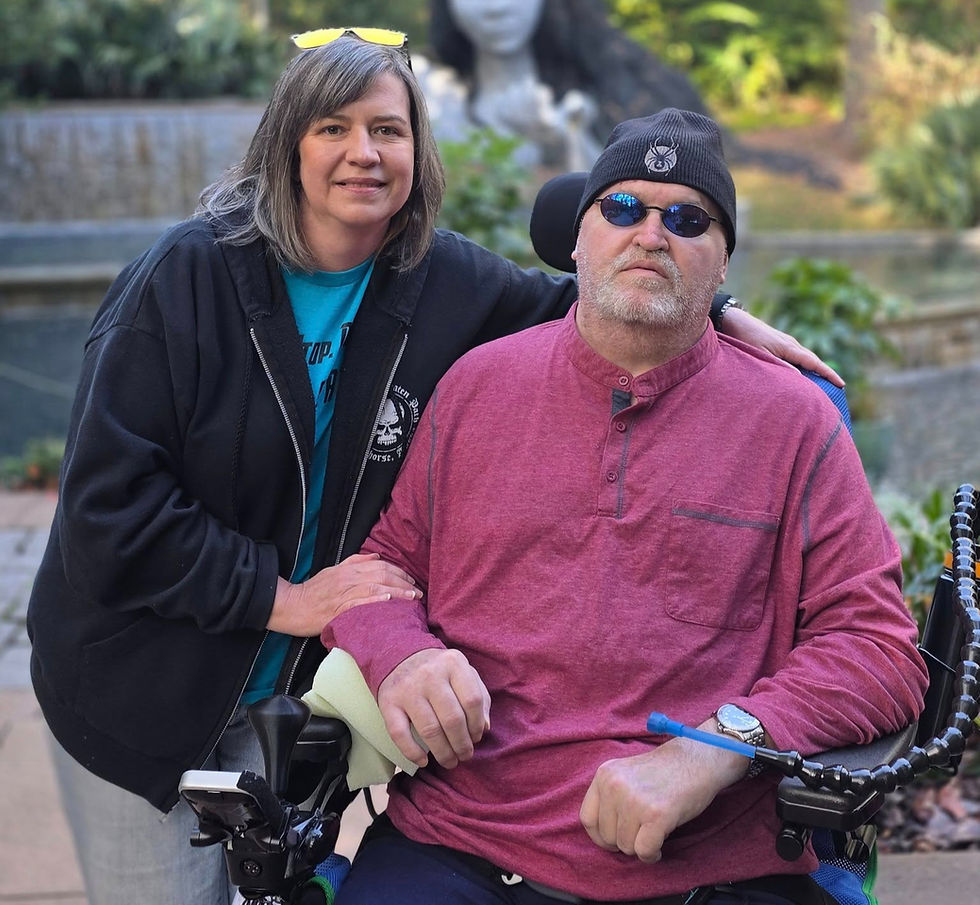
ATLANTA, Ga. - When Shannon Williams answered her husband’s phone on July 31st, she expected to hear his voice. Instead, a stranger told her that Don Williams had been in a serious accident and was being transported to UAB Hospital, a Level One trauma center in Birmingham.
The hours that followed would mark the beginning of a life-changing journey, one that placed Shannon into an unexpected new role: caregiver.
A Critical First Week
When Shannon arrived at the hospital, she was allowed only a brief moment with her husband. The severity of his injuries was immediately clear.
“He was really, really messed up,” she said. “His head, his face, the neck brace, all the equipment. I knew it was bad.”
Don underwent three surgeries during the first week. Sedated and intubated, he was unaware of the early days of medical intervention. Shannon, however, remembers every moment.
“I wasn’t stressed at first, I could tell God was with us,” she said. “Later, as I learned more about his injuries, I realized what we could be facing long-term.”
Becoming a Caregiver Overnight
Don’s injuries left him with limited hand function and a dependency on assistance for nearly all daily tasks. Shannon immediately began learning how to meet his needs, feeding, bathing, adjusting, and monitoring his position to prevent complications.
Some instruction came from nurses, but much of it, she said, was learned through necessity.
“You figure it out,” she said. “You know how to feed yourself, so you learn how to feed someone else.”
One of the most significant lessons came too late to prevent a serious complication: pressure sores. Don developed a severe bedsore that required surgical treatment.
“I wish I had known from the beginning that he needed to be turned every two to three hours,” she said. “That’s my biggest regret.”
Finding Support at the Shepherd Center
Don is currently receiving rehabilitation at the Shepherd Center in Atlanta, one of the nation’s leading facilities for spinal cord and brain injuries. The hospital has become a source of education and support for Shannon and other families.
“There is a whole community of caregivers here,” she said. “We all have different situations, but we’re walking similar paths. The group sessions help us realize we’re not alone.”
The Physical and Emotional Toll
Like many caregivers, Shannon says the emotional strain and lack of rest can be overwhelming.
“If I don’t get enough sleep, I can tell,” she explained. “Small things bother me more. I know when I need to step away and decompress.”
She has learned to carve out small pockets of self-care: protein shakes, occasional massages, and brief breaks in the apartment provided by the Shepherd Center.
“You cannot take care of someone else if you’re not taking care of yourself,” she said.
Strong Community Support
Shannon says she and Don have felt constant support from family and friends in Birmingham and beyond.
“We always knew we had great friends, but we didn’t know how amazing they were until now,” she said. “They check on us daily. They drive to Atlanta to see us. The support hasn’t dropped at all.”
Faith and Resilience
Throughout the ordeal, Shannon says faith has been her anchor.
“God has given us a strength we didn’t know we had,” she said. “That’s how we’re getting through this.”
Don, she says, remains grateful, expressing thanks every day for the care she provides.
Looking Ahead: Advocacy and Awareness
Shannon hopes to use their experience to push for improvements in hospital communication, caregiver education, and insurance processes. She wants future caregivers to receive clearer guidance than she did in the early days of Don’s recovery.
She welcomes connections from individuals or organizations who can help her advocate for change.
She can be reached at: shan.2008@gmail.com
A Reminder to Caregivers Everywhere
Shannon also invites caregivers who feel isolated or overwhelmed to reach out.
“I know how hard this is,” she said. “You aren’t alone.”
As Don continues rehabilitation and Shannon continues her role as caregiver, their story highlights an often unseen reality, one filled with exhaustion, learning, sacrifice, and profound love.
Their message is simple: caregivers matter, and they deserve support.


Comments